By JON GAMBRELL Associated Press
DUBAI, United Arab Emirates (AP) — Iran’s national rial currency dropped to a record low Wednesday while a U.S. naval blockade has increased pressure on its already battered economy amid a fragile ceasefire.
Experts warn that the rial’s slide is likely to further fuel inflation in a country where many imported goods, from food and medicine to electronics and raw materials, are affected by the dollar rate.
The blockade has cut into a key source of government revenue and hard currency by stopping or intercepting oil shipments. Iran’s leaders are betting that an economy built to be self-reliant under decades of international sanctions can endure the pain.
Four weeks into the ceasefire that has largely halted fighting in Iran, the U.S. and Iran remain locked in a standoff over the Strait of Hormuz, through which a fifth of the world’s traded oil and gas passes in peacetime.
Iran’s closure of the strait has put pressure on both sides and impacted the world economy, pushing up prices for food, fuel and other products made from petroleum. Frustration is mounting, as dozens of nations this week repeated calls to open the critical waterway for both humanitarian and economic relief.
Trump rejects Iran’s proposal
Meanwhile, U.S. President Donald Trump rejected Iran’s proposal to reopen the Strait of Hormuz in exchange for the U.S. Navy lifting its blockade of Iranian ports, he told Axios on Wednesday.
Iran’s proposal, shared with U.S. leaders this week, sought to postpone discussions around Iran’s nuclear program, leaving unresolved the disagreements that led the U.S. and Israel to go to war on Feb. 28.
“The blockade is somewhat more effective than the bombing,” Trump told Axios. “And it is going to be worse for them. They can’t have a nuclear weapon.”
The Iranian proposal would have pushed negotiations on the country’s nuclear program to a later date, two regional officials said earlier this week. The officials with knowledge of the proposal spoke on condition of anonymity to discuss the closed-door negotiations between Iranian and Pakistani officials.
One of the major reasons Trump has said he went to war was to deny Iran the ability to develop nuclear weapons.
Pakistani Prime Minister Shehbaz Sharif said Wednesday his government was continuing efforts to help ease tensions between the U.S and Iran following an initial round of direct talks on April 11.
Trump welcomes the UAE decision to exit OPEC
The United Arab Emirates decision to leave OPEC on May 1 could help calm the world’s volatile oil market shaken by the war, Trump said.
“I think ultimately it’s a good thing for getting the price of gas down, getting oil down, getting everything down,” Trump said in an exchange with reporters in the Oval Office.
Oil prices have been climbing steadily, and continued to surge on Wednesday.
Iran’s currency plummets after holding steady
Iran’s rial had remained stable in the early weeks of the war, in part because there was little trading or imports. It’s slide began this week, hitting a record low Wednesday of 1.8 million to the dollar.
The hit comes months after a currency shock helped fuel nationwide protests in January, deepening public anger over rising prices and fears about the country’s economic future.
Iran’s economy has faced decades of sanctions, chronic inflation and a widening gap between official and open-market exchange rates.
Prices of basic household goods had already been rising before the rial’s latest fall, adding to pressure on families. Over the past two weeks, people buying daily essentials have faced higher prices for milk, yogurt, cooking oil, bread, rice, cheese and detergents.
The increases point to broader inflationary pressure in the economy driven by uncertainty, supply disruptions, higher transport and production costs and the continuing impact of the U.S. blockade. The rial’s latest slide is likely to add further pressure particularly on goods tied to imports, packaging and raw materials.
The cost of the war hits $25 billion for the US
The U.S. has spent an estimated $25 billion so far on the Iran war, a top defense official said during a Congressional hearing Wednesday.
Much of that has gone toward munitions, but the expenses also include running the operations and replacing equipment, Jules Hurst III, the acting undersecretary of war for finances, told the House Armed Services Committee.
___
Associated Press writers Munir Ahmed in Islamabad and Collin Binkley, Stephen Groves and Aamer Madhani in Washington contributed to this report.
News
Iran’s rial currency hits record low as a shaky ceasefire with the US and Israel holds
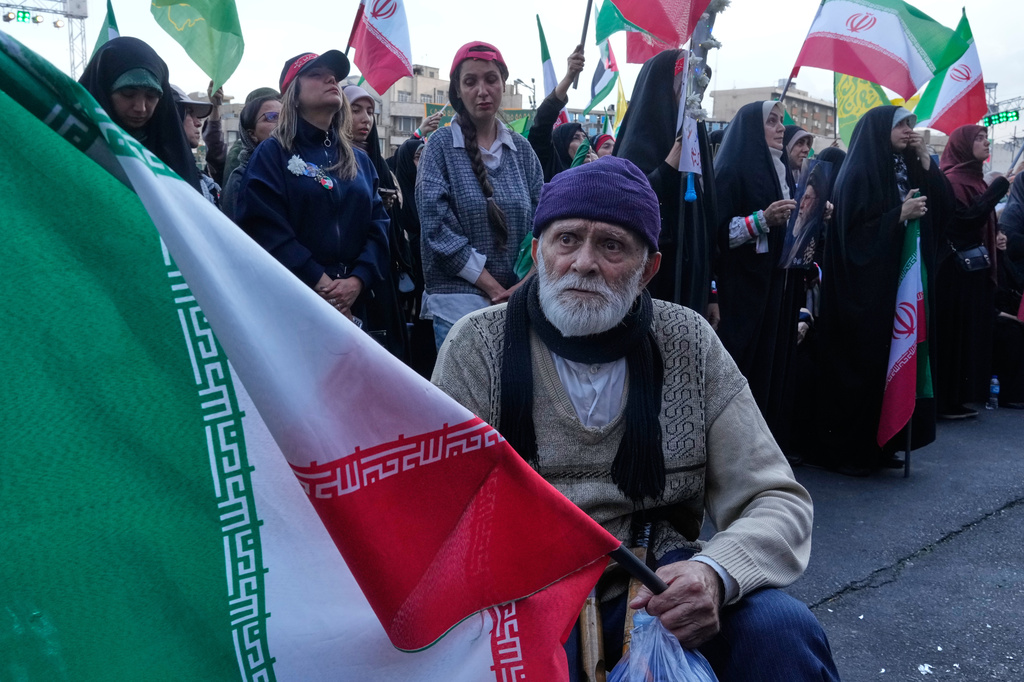
A man holds an Iranian flag in a state-organised rally in Tehran, Iran, Wednesday, April 29, 2026, celebrating the birthday of Imam Reza, the 8th Shiite Muslims' Imam, and supporting Iranian Supreme Leader Ayatollah Mojtaba Khamenei. (AP Photo/Vahid Salemi) Photo: Associated Press